

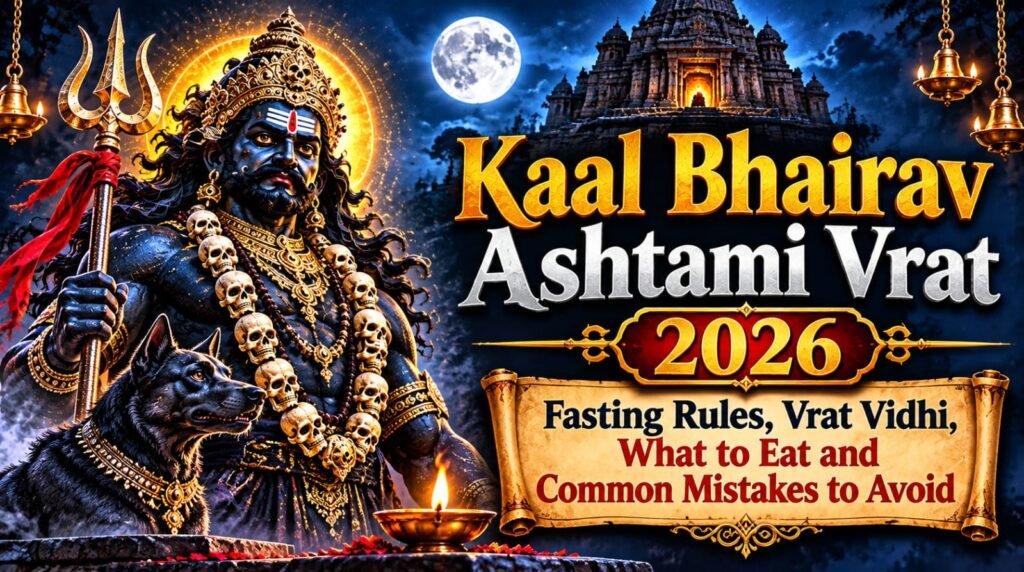
Many devotees feel a little unsure about observing Kaal Bhairav Ashtami Vrat 2026 correctly, especially with questions around date, exact muhurat, what to eat, and what can break the fast unknowingly.
If you want to keep this vrat in a simple but disciplined way on Thursday, 12 November 2026, this guide will walk you through clear rules, practical Vrat Vidhi, a sattvic food plan, and the common errors that quietly weaken the sankalp.
Meaning Of Kalashtami And Why This Vrat Matters
kalashtami is observed on Krishna Paksha Ashtami every month, but the Margashirsha month Ashtami is specially known as Kala Bhairava Ashtami or Kalabhairav Jayanti, when devotees remember the fierce, protective form of Shiva who guards time, directions and dharma.
On this Ashtami, devotees seek protection from sudden accidents, legal and travel troubles, and pray for courage to act rightly even in difficult situations.
Regular observance is often taken up by those who feel stuck in fear, insecurity, or chronic delays in work, and want a steady spiritual routine that sharpens focus and reduces inner hesitation.
Kaal Bhairav Ashtami Vrat 2026 Date And Shubh Muhurat
- Date: Thursday, 12 November 2026
- Tithi / Nakshatra: Krishna Ashtami
- Tithi begins: 12 November 2026, 06:11 AM
- Tithi ends: 13 November 2026, 03:57 AM
- Nishita Kaal Muhurat: 11:46 PM to 12:41 AM, 13 November 2026
Nishita Kaal is the sacred midnight window associated with the fierce form of Shiva, so try to plan your main Bhairav puja, stotra path or deep meditation in this period.
These timings are given for New Delhi, India; in other cities within India, the clock time can shift slightly, so local Panchang guidance is helpful.
Core Fasting Rules For This Ashtami
For this vrat, devotees usually follow strict niyam with focus on satvik living for at least one full day, and in many homes, from the previous sunset itself.
The basic rule is to keep the stomach light, the mind alert and the senses disciplined, avoiding anything that excites anger or greed through food, company or entertainment.
Where health permits, many people observe nirjal or only-water fast till the night puja, but those with medical conditions can keep a phalahar or light fast with fruit, milk and simple vrat-friendly items.
Key Kalashtami Fasting Rules To Remember
Classic kalashtami fasting rules followed in many traditional homes include a few clear dos and don’ts that keep the vrata shuddh.
- Start the day with a bath and clean clothes, preferably in the Brahma muhurat, or at least before sunrise.
- Take a clear sankalp in front of Shiva or Bhairav: for whom you are fasting, and for how long.
- Avoid grains, non-veg, eggs, alcohol, tobacco and onion–garlic completely.
- Cut down stimulation: loud music, binge-watching, heated arguments, gossip.
- Chant Bhairav mantras or “Om Namah Shivaya” through the day as your schedule allows.
- Offer something in charity: black sesame, urad, blankets, footwear or feeding dogs, as per your capacity.
Step-By-Step Bhairav Ashtami Vrat Vidhi
A calm, methodical bhairav ashtami vrat vidhi matters more than elaborate decoration; attention should stay on shraddha and discipline, not show.
If you have a Bhairav temple nearby, it helps to visit once in the evening or during Nishita Kaal; otherwise you can perform a simple puja at home in a clean corner facing east or north.
Morning Sankalp And Shiva Puja
Begin by cleaning the temple area, placing a picture or idol of Shiva or Bhairav, lighting a lamp with sesame or mustard oil, and offering water, bilva leaves and white flowers if available.
Stand or sit with folded hands, state your name, gotra if known, and clearly say that you are observing this Ashtami fast for peace, protection and removal of obstacles.
Then recite any known Shiva stotra, or even one mala of “Om Hreem Batukabhairavaya Namah” slowly and attentively.
Nishita Kaal Bhairav Puja
During the Nishita Kaal muhurat, keep the place quiet, switch off non-essential lights and sit with a small Bhairav image or Shiva linga if you have one.
Offer black sesame, mustard oil deepa, incense, red or yellow flowers, and simple naivedya like mishri, fruits or kheer prepared without grains.
Chant Bhairav mantras, read Kaal Bhairav Ashtakam or other stotra, and sit a few minutes in silence asking for clarity and protection from wrong paths.
Simple Kalashtami Upvas Niyam For Food And Lifestyle
Many working devotees need practical kalashtami upvas niyam they can realistically follow along with job, studies and family duties.
If full-day nirjal is not possible, plan two very light fruit or milk intakes, spaced well apart, and avoid constantly thinking of food by keeping yourself engaged in japa or simple seva.
Maintain moderation in speech too: speak only what’s needed, avoid lying and harsh words, and stay away from arguments even if you feel provoked.
What To Eat During This Vrat
Think “light and easy to digest”, so the body doesn’t pull all your energy away from prayer towards digestion.
- Boiled or roasted potatoes cooked in sendha namak and ghee or oil.
- Fresh fruits like banana and apple as per season.
- Milk, curd or lassi, or light kheer prepared without rice, using vrat-friendly ingredients.
- Sabudana khichdi or vada if your family tradition allows it, cooked simply, not as a heavy feast.
- Plenty of plain water through the day, unless you have taken a nirjal sankalp.
Common Mistakes To Avoid During This Vrat
Many vratas lose their depth not because rules are unknown, but because small compromises creep in through the day.
One big error is treating the fast as a social event with heavy vrat “special” food, endless chatting and late-night phone scrolling that leaves the mind scattered at the actual time of puja.
Another frequent mistake is breaking the fast casually without any prayer, or eating outside food from restaurants where onion–garlic or mixed oils may be used, even if the dish looks “fast-friendly”.
Who Can Keep This Vrat And How Often
This fast is usually open to all adults who can safely manage a day of dietary restriction and mental discipline under their health conditions.
Those with diabetes, blood pressure issues or pregnancy should speak to their doctor and choose a gentle phalahar version instead of sudden strict fasting.
Some devotees keep it only on the main annual Jayanti, while others observe the monthly Ashtami as well, adjusting intensity of the fast according to health, work and family responsibilities.
Conclusion
Observed with clarity, simplicity and honest effort, this vrat can act as a yearly reset point for your courage, focus and spiritual discipline.
Follow the core rules, keep food light, avoid the common mistakes, and if you wish to deepen your practice, you can also explore guided puja services from Live Puja Yagya as support for your home sadhana.
Frequently Asked Questions
Q1. When is Kaal Bhairav Ashtami Vrat in 2026?
Ans. In 2026, Kala Bhairava Ashtami falls on Thursday, 12 November 2026, for New Delhi, India. Krishna Ashtami tithi runs from 06:11 AM on 12 November to 03:57 AM on 13 November, with Nishita Kaal muhurat from 11:46 PM to 12:41 AM, 13 November 2026.
Q2. Can I eat one proper meal during this fast?
Ans. Many people keep a partial fast with one light satvik meal and fruits or milk otherwise. If you do that, avoid grains, onion–garlic, non-veg, alcohol and heavy fried food, and respect your original sankalp without changing rules mid-day.
Q3. Is it necessary to visit a Bhairav temple on this day?
Ans. A temple visit is considered very auspicious, especially for offering oil, black sesame and feeding dogs near the shrine. If that isn’t practical, you can do a sincere home puja with mantra chanting and charity intention, which is also meaningful.
Q4. Can people with health issues keep this vrat?
Ans. People with diabetes, blood pressure, stomach troubles or pregnancy should avoid drastic fasting without medical advice. A moderated fast with fruits, milk and simple satvik food is usually recommended, so the health condition stays stable while you pray.
Q5. Do I have to stay awake till midnight for Nishita Kaal puja?
Ans. The ideal time for Bhairav puja on this day is Nishita Kaal, so staying awake for that window is spiritually beneficial if your health allows. If you cannot, do a sincere evening puja and a short prayer before sleeping, and keep the mind meditative through the day.
Q6. How often should I observe this fast for good results?
Ans. Some devotees observe only the main annual Jayanti fast, while others keep a monthly Ashtami vrat in a lighter form. A consistent, manageable practice over time usually has more impact than rare extreme fasting that you can’t maintain.