

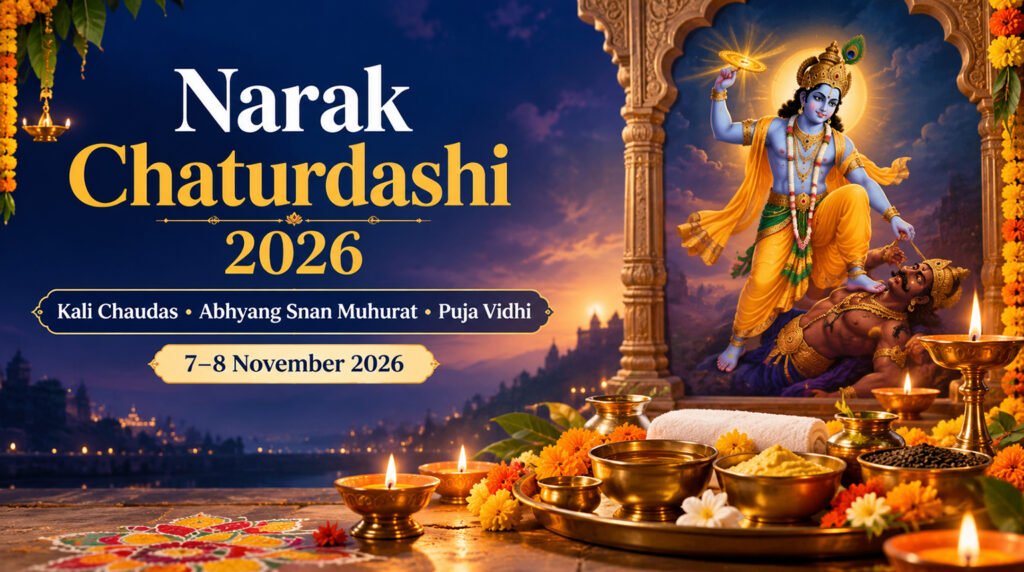
Devotees start searching for kali chaudas 2026 details well before Diwali because this day is linked with protection from negativity and relief from Narak-like suffering, and in 2026 it falls on Sunday, 8 November 2026.
If you’ve ever felt unsure about the exact muhurat, which oil to use for Abhyang Snan, or how this day differs from Narak Chaturdashi and Choti Diwali, this guide focuses on timings, rituals and meaning in a clear, practical way.
What Narak Chaturdashi Means Before Diwali
The day of naraka chaturdashi comes between Dhanteras and Lakshmi Puja and is associated with Lord Krishna’s victory over Narakasura and with Deepa Dan, symbolic of light removing inner darkness.
Many households use this period to work on subtle negativity: body purification through sacred bath, energy purification through specific pujas, and space purification through deep cleaning and lighting diyas in corners often ignored on Diwali night.
Narak Chaturdashi 2026 Date And Shubh Muhurat
- Date: Sunday, 8 November 2026
- Tithi / Nakshatra: Krishna Paksha Chaturdashi
- Tithi begins: 7 November 2026, 10:48 AM
- Tithi ends: 8 November 2026, 11:28 AM
- Abhyang Snan Muhurat: 5:41 AM to 6:38 AM
- Arunodaya (pre-dawn window): 5:04 AM to 6:40 AM
For New Delhi in 2026, Narak Chaturdashi and the sacred oil bath are observed on Sunday, 8 November during the pre-dawn Abhyang Snan window while Chaturdashi tithi prevails at sunrise.
These timings are for New Delhi; in other cities across India the clock time can shift slightly, so cross-check with your local Panchang or priest.
Kali Chaudas And Choti Diwali: How The Names Differ
Across India, the same lunar day carries several names, which often creates confusion when families try to plan puja together.
In many regions, people call this day narak chaturdashi 2026; in Gujarat and some western parts of India the night is famous as Kali Chaudas, and in many Hindi-speaking homes it’s simply known as Choti Diwali.
Some Gujarati and tantra-following lineages associate Kali Chaudas with the preceding Trayodashi night for specific Kali upasana, while Narak Chaturdashi focuses on early-morning snan and Deepa Dan on Chaturdashi itself.
This is why different calendars may list 7 November for Kali Chaudas and 8 November for Narak Chaturdashi; many Drik-based Panchangs for New Delhi place the primary morning observance on Sunday.
Abhyang Snan Muhurat And Morning Rituals
The narak chaturdashi abhyang snan muhurat is the heart of this day because scriptures describe it as burning the sins that would otherwise lead the soul towards Narak experiences.
Drik-based calendars follow a clear rule: the holy bath should be taken in the pre-dawn period on the Chaturdashi tithi, between Arunodaya and sunrise, with oil applied before sunrise.
In 2026, that sacred window in New Delhi is between 5:41 AM and 6:38 AM, overlapping almost fully with the Arunodaya stretch from 5:04 AM to 6:40 AM.
If your family includes elders or small children who can’t manage the exact muhurat, aim to complete the oil application and main bath as close to sunrise as possible while staying calm.
Stepwise Narak Chaturdashi Abhyang Snan
Start the morning with a brief mental sankalpa, stating your name and the intention of removing past negativity and inviting light into your life.
Massage the body with oil mixed with a pinch of haldi and a few drops of scented oil, or traditional ubtan made from besan and turmeric. Begin from head to toe while chanting simple names of Lord Narayana or Krishna.
After a few minutes, bathe with lukewarm water and keep clean clothes ready in advance. If possible, perform this bath facing east, treating it as a personal yagna of purification rather than a rushed shower.
Once dressed, offer a simple arghya to Surya and light a diya at the household shrine. Only then move to breakfast or festive sweets.
Kali Chaudas Puja Vidhi: Evening Worship And Protection
The kali chaudas puja vidhi followed in homes is usually simpler than temple rituals, and intention and clarity matter more than the length of the procedure.
Most families perform this puja after sunset on Chaturdashi, before crackers get loud, so that mantras and offerings are done in a peaceful environment.
Clean the puja space and place a red or black cloth on the asana if you’re specifically worshipping Goddess Kali, then arrange a small murti or picture with a diya and incense, plus flowers and sweets.
Offer akshata and kumkum with flowers and a simple naivedya such as kheer or fruits. Chant the mantras you know or recite names of the goddess and close with a short prayer asking for removal of fear and obstacles in the year ahead.
Home Puja, Shraap Nivaran And Protection Focus
Some people also use this evening for simple shraap nivaran or protection-focused practices, guided by their family priest, such as lighting extra diyas at thresholds or performing a basic drishti removal for children.
If you follow such methods, keep them sattvic: avoid harming any being and skip dark or fearful imagery. Focus instead on surrendering fear to the deity and committing to cleaner thoughts and actions.
Choti Diwali Traditions: Lights, Deepa Dan And Cleaning
Many families treat choti diwali 2026 as a rehearsal for the main Diwali night, but the spiritual weight of this evening goes beyond trial runs for diyas.
Deepa Dan on Narak Chaturdashi is often done for ancestors and wandering souls, with diyas placed at doorsteps and near water sources.
A practical way to honour this is to reserve a few extra diyas for less visited corners such as staircase turns and parking areas, balconies and the back of the house. Offer a quiet prayer for peace for any soul that still feels restless.
Many households also complete the last round of physical cleaning on this day so that Lakshmi Puja on Amavasya can focus more on worship and family time than on dusting and rearranging furniture.
Spiritual Significance And Inner Meaning
The story of Narakasura being defeated by Krishna and Satyabhama is often shared in brief with children on this day, but its symbolism is equally relevant for adults juggling work, family and personal doubts.
Narakasura represents the accumulation of unchecked desires and ego, and the act of taking pre-dawn snan before sunrise marks a conscious step away from old patterns into clearer self-awareness.
This part of the festival also relates to facing our own shadow side: habits, anger and grudges we normally hide, and placing them at the feet of a fierce yet protective deity who cuts through illusions.
When you treat each step as a reminder to let go of one concrete negativity, perhaps a specific resentment or long-postponed apology, the festival moves from ritual to real inner work.
Balancing Regional Traditions And Family Practicality
Because panchangs differ, one side of the family may insist on Trayodashi night for Kali upasana while another follows Chaturdashi morning guidelines, which easily leads to arguments instead of devotion.
A simple approach is to respect both traditions: if your elders observe Trayodashi night, join them wholeheartedly, and still perform the early-morning bath on Chaturdashi when possible.
Conclusion
Keeping the details of kali chaudas 2026 clear lets you spend less energy on confusion and more on the quiet experience of pre-dawn snan, protection-focused puja and Deepa Dan before Diwali, wherever you live in India.
Plan your morning and evening in advance, align with your family’s parampara, and if you wish to go deeper into guided rituals you can consult the priests and services associated with Live Puja Yagya.
Frequently Asked Questions
Q1. When is Narak Chaturdashi in 2026?
Ans. For New Delhi and Drik-based Panchang calculations, Narak Chaturdashi in 2026 falls on Sunday, 8 November 2026, with the Abhyang Snan muhurat in the pre-dawn window from 5:41 AM to 6:38 AM.
Q2. Is Kali Chaudas 2026 on 7 November or 8 November?
Ans. Many Drik-based Panchangs place Narak Chaturdashi and the main observance on Sunday, 8 November 2026. Some regional traditions, especially in Gujarat, associate Kali Chaudas with the previous Trayodashi night on 7 November for specific Kali upasana.
Q3. What should I do during Narak Chaturdashi Abhyang Snan?
Ans. Wake before Arunodaya, apply oil or ubtan over the body with simple prayers, and bathe within the muhurat while Chaturdashi tithi prevails. After snan, wear clean clothes, offer water to the Sun, and then start regular Diwali preparations.
Q4. How is Choti Diwali different from the main Diwali night?
Ans. Choti Diwali focuses on purification, Narak Chaturdashi snan and Deepa Dan for removing darkness and remembering departed souls. The main Diwali night, on Amavasya, centres on Lakshmi Puja, wealth, prosperity and family gatherings.
Q5. Can I do Kali Chaudas puja at home without a priest?
Ans. Yes, most households perform a simple home puja without a priest, using a picture or murti of Goddess Kali, a diya, incense, flowers and a basic food offering. Keep your focus on sincere prayer for protection, courage and removal of inner negativity.
Q6. What if I miss the exact Abhyang Snan muhurat on Narak Chaturdashi?
Ans. If you miss the precise muhurat, take a respectful bath as early as you reasonably can and perform a short prayer accepting your limitation. The spirit of sincerity, cleanliness and intention matters more than clock perfection for most householders.